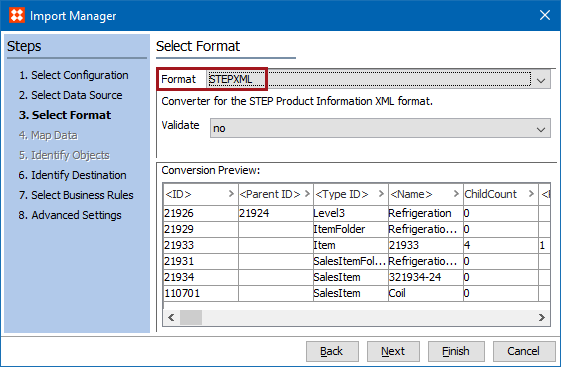
The Advanced STEPXML format and the STEPXML format provide access to the same functionality but each has its own interface. The STEPXML format is easier for beginners to use since its user interface includes parameters with valid options. Using the Advanced STEPXML format requires knowledge of the STEPXML tags, XML attributes, and valid settings for the schema that must be created manually in the Export Manager or OIEP template parameter (see the Outbound Data section below).
As defined in the tags and examples documentation, not all data that can be exported using Advanced STEPXML can be imported again. Available tags and examples using STEPXML are available in the STEPXML Tags and Examples documentation here.
Note: For assistance in creating a valid Advanced STEPXML template, use the STEPXML user interface to output a template and then modify as needed for inbound or outbound STEPXML data. For more information, see STEPXML Format here.
The schema is not publicly available, which means it is not possible to validate STEPXML without access to the XSD file.
The XSD file for STEPXML is available at:
http://[application server]/files
A web view of the schema is available at:
http://[application server]/xsd/index.html
The STEPXML schema is extended continuously but should always be backwards compatible. For more information on legacy naming conventions, see the Backward Compatibility in STEPXML documentation here.
Advanced STEPXML is available for selection in:
Since STEPXML is the native format for STEP, mapping data is not required and the Map Data step is disabled.
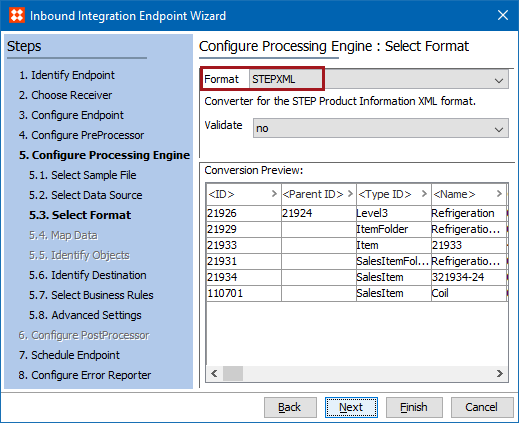
Although Advanced STEPXML is not available for selection in inbound tools, Advanced STEPXML files can be imported successfully using the STEPXML Format option here.
Import Manager
IIEP
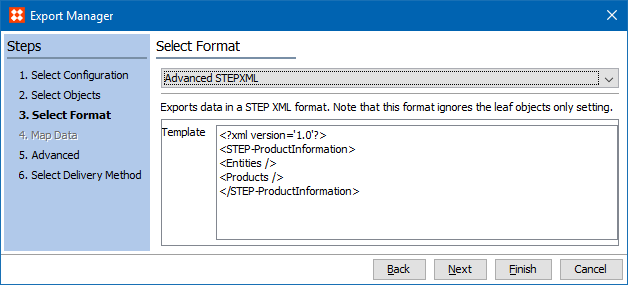
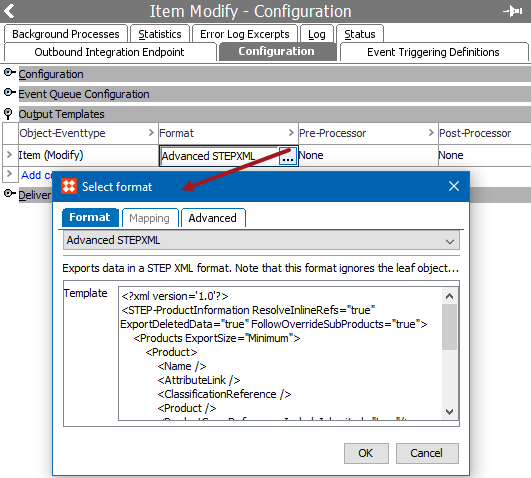
The default template loaded for export will output all entities and products. Update it with your own template to configure the data, control the attribute groups and reference types, and define the layout of the export.
Since no undo functionality is available in the Template field, it is good practice to use an external XML editor program for creating and editing a template. To test a template's validity for output, paste the XML into STEP.
Available tags and example templates using STEPXML are available in the STEPXML Tags and Examples documentation here. Ultimately, the template must be based on the STEPXML XSD. Click the STEP API Documentation button on the STEP WebStart page for a link to the XSD file.
Export Manager
OIEP
2018, Stibo Systems