Open topic with navigation
Attribute Display Sequence
As per the default function in STEP, attributes shown in the Product Editor of a product are shown in alphabetical order. However, if an Attribute Display Sequence Attribute has been set up, the attributes shown in the Product Editor are sorted according to the order set in the Display Sequence attribute.
Important: The Display Sequence attribute has only an impact on the attributes shown in the Product Editor. It has no impact on the order in which attributes are exported.
Attribute Display Sequence Setup
This section describes how you can set up the STEP Workbench, so that the attributes shown in the Product Editor are displayed according to the order set in the Display Sequence attribute.
Setup Display Sequence Attribute
A Display Sequence Attribute has to meet the following conditions:
- The attribute has to be a Description attribute
- The attribute has a Validation Base Type or either number or integer
- The attribute has to be valid for the Link Type Product attribute validation and/or valid for the Object Type Attribute
- The display sequence attribute is selected in System Setup > Users & Groups > System Settings tab > Product Information Manager Default Settings flipper > Default Attribute to use as Attribute Display Sequence Attribute
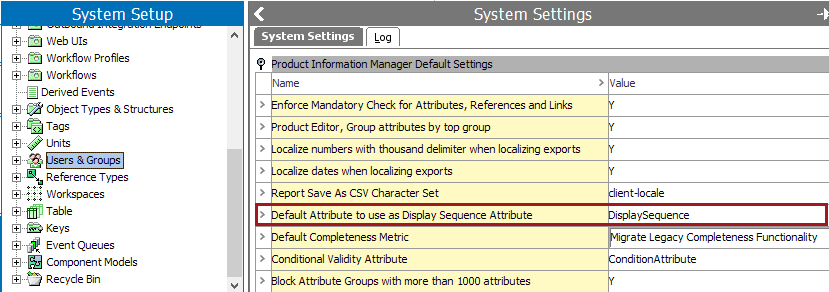
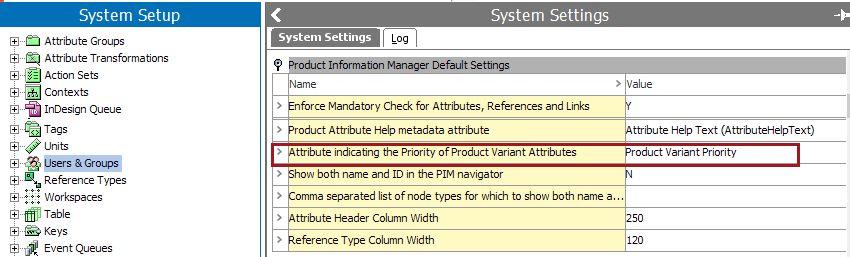
View Menu: Choose Attribute Display Sequence Attribute
By default, users can select their own Display Sequence attribute.
If you want to disable this possibility, do the following:
- In System Setup, unfold Users & Groups, then select the relevant User Group.
-
Select the GUI Set-Up tab, and under the Menu Contents flipper locate the Choose User Display Sequence Attribute option.
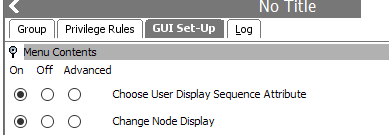
Per default, the Choose User Display Sequence Attribute radio button is set to ON. Turn it OFF.
For more information on how to use the Display Sequence Attribute, see the STEP User Guide.
Sorting Attributes
Once the attribute display sequence has been set up, a user can set the sorting. The attributes shown in the Product Editor can be sorted according to the order set in the Display Sequence attribute. This can be done in two ways:
- by setting a number in the Display Sequence field of the attribute itself.
- by setting a number in the Display Sequence column under Linked Attributes.
Setting a Display Sequence number on the attribute
-
In System Setup, unfold Attribute Groups, then click the relevant attribute.
An Attribute Editor appears.
- In the Display Sequence field, type a number.
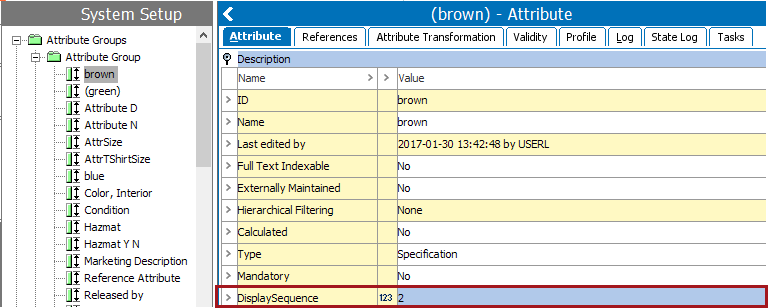
- Type the appropriate sequence number for each attribute in an attribute group. You can choose to set a sequence by using example 10, 20, 30, etc., or by using 1, 2, 3, etc. If you want to add attributes in between, you can then use for instance 15 in the first case, or 1.5 in the latter case.
Note: If you do not know which attribute on your system is set up as the Display Sequence attribute, you can go [System Setup], click Users & Groups, and verify the name of the Display Sequence attribute under Default Attribute to use as Attribute Display Sequence Attribute. Alternatively, click a product, click the References tab. Under Linked Attributes, the first column shows the Display Sequence attribute on your system.
Setting a Display Sequence number under Linked Attributes
- In Tree, unfold the Product Hierarchy, click the relevant product folder or product.
- Click the References tab.
-
Under a Linked Attributes flipper, type a number in the cell related to the Display Sequence attribute column in front of the relevant attribute. In the example below, the 'Linked Attributes from Product Hierarchy' is being used.
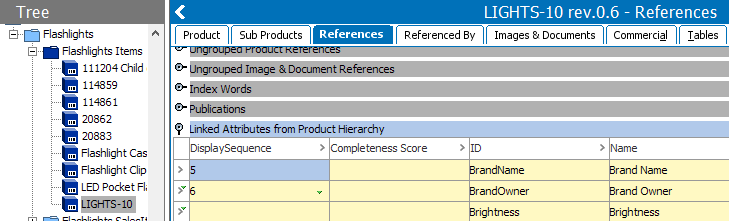
Note: You are only able to edit the Display Sequence attribute column if the attribute is linked in at the Product Hierarchy level that you have selected. The Inherited from column shows where the attribute is linked in. An attribute can be linked in to one or more Attribute Groups. In the Attribute Groups column, you can see to which Attribute Group(s) the attribute belongs.
-
Optionally, if you want to create another Display Sequence at the level that you have selected, right-click the relevant row, click Create Local link. You are now able to type a local value in the Display Sequence column.
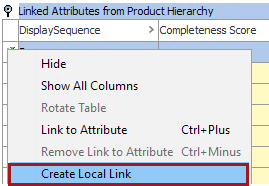
The symbol will change in the inherited column and also the background color of the row will change from yellow to white. You are now able to type a local value in the Display Sequence column.
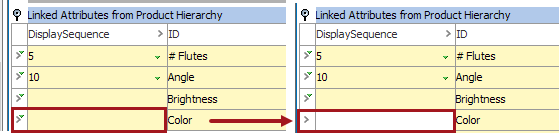
Note: Attributes that have no sequence number, and therefore are alphabetically sorted, will be placed last on the list.
Important: Information about the Display Sequence of attributes is exported in an XML export. If the Display Sequence number is set on the attribute itself, the XML Export will contain the Attributes with Display Sequence attribute value. If the Display Sequence number is set on the Attribute Link, the XML Export will contain the Display Sequence information on the Attribute Links. A combination of the two is possible.
Selecting a Personal Attribute Display Sequence Attribute
If you are interested in sorting attributes in the Product Editor on another Display Sequence attribute then the one set in System Setup >Users and Groups> Default Attribute to use as Attribute Display Sequence Attribute, do the following:
- Go to View > Choose Attribute Display Sequence Attribute.
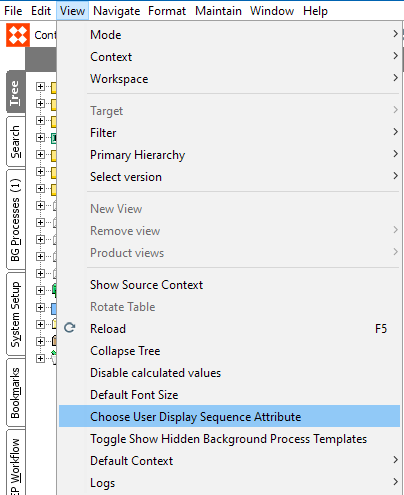
A Select User Display Sequence Attribute dialog box appears.
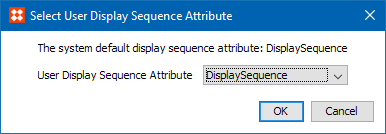
- If you now select a product folder /product, then select the References tab, the first column under Linked Attributes will now show your personal Display Sequence attribute.
Display Sequence Attribute and the Product Editor Display
In the Product Editor, the attributes are sorted on the Display Sequence attribute, within an Attribute Group. If no Display Sequence attribute is set, the attributes are shown in alphabetical order.
Tooltip
-
Point the mouse to the Attribute name.
A Tool tip will appear.
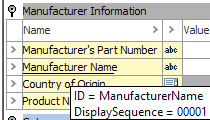
- Information about the Attribute Name, ID and the Display Sequence attribute is shown.
Note: If you select two or more products, the Products Editor shows the attributes always in alphabetical order. The reason for this is that you can select two or more products, that have the same attribute, but with different values for the Display Sequence attribute.
Display Sequence Attribute & Classifications
Your system can be set up to display the Display Sequence attribute at the Classification level.
-
In Tree, navigate to a classification, select a folder, then click the References tab.
Under Attributes a Display Sequence attribute column is shown.
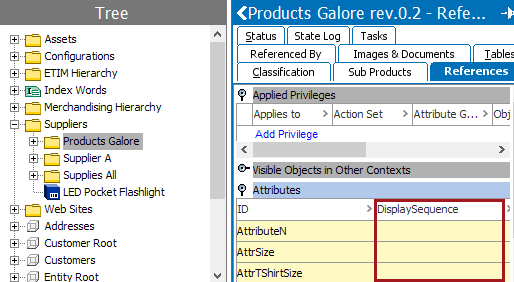
Important: It is of no use though to maintain the Attribute Display sequence here, as it will have no effect anywhere, not in the Classification editor, nor in an export.
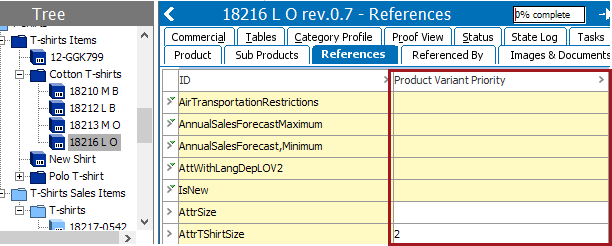
Setting the Priority of a Product Variant Attribute
- In Tree, select the parent containing the product variants.
- Click the References tab.
- Under Linked Attributes, type a number in the column for the Attribute indicating the Priority of Product Variant Attributes attribute specified in the User and Groups under the Product Information Manager Default Settings flipper.
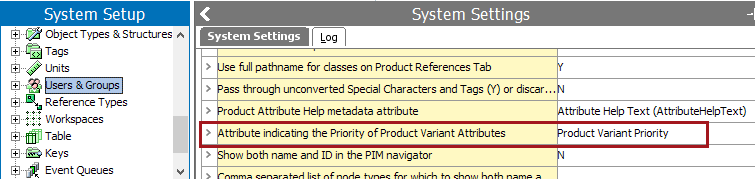
Display sequence values can be entered in the column related to the respective attributes.
Display Sequence Attribute & Tables
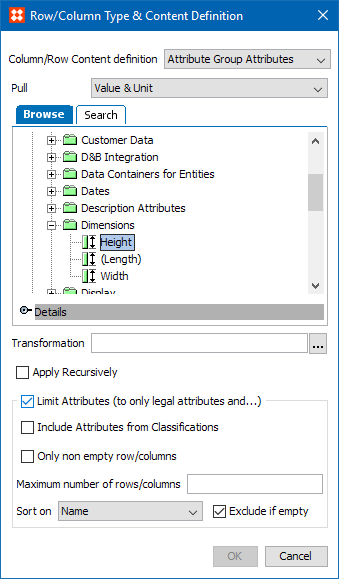
You can use the Display Sequence attribute to sort attributes within Attribute Groups in Tables. For more information, see the STEP Table Component User Guide.
Below you find a screen shot, showing where you select the Display Sequence attribute that will determine the order in which the attributes within an Attribute Group will show in a table.
Setting the Attribute Display Sequence on Publication (Green) Hierarchy Objects
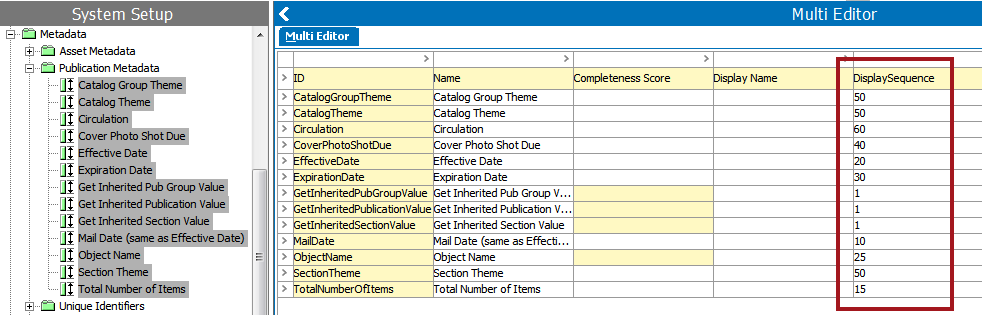
Metadata (Description) attributes on publication hierarchy objects (publication groups, publications, sections, and planned pages) may also be sequenced using a display sequence attribute.
Because publication hierarchy objects do not use Reference Types, attribute sequencing cannot be set from a 'Linked Attributes' flipper on the References tab, which is unavailable on publication hierarchy objects. Instead, metadata attribute sequencing must be set up at the attribute level. However, attributes may be multiselected to allow sequencing from a single location.
2017, Stibo Systems