 Tools icon in the upper right corner, and then select Profile Configuration.
 Category Profiles can be configured with strict profiling parameters via the Profile Configuration screen. From this view, users can:
Note: The profile must be updated manually every time changes are made to any of the parameters.
Tools icon in the upper right corner, and then select Profile Configuration. The Select Profile Filter Business Condition parameter allows users to filter the data being profiled with the specified business rule. This can be particularly useful if only objects of a specific type should be profiled or objects with specific attribute values should be left out.
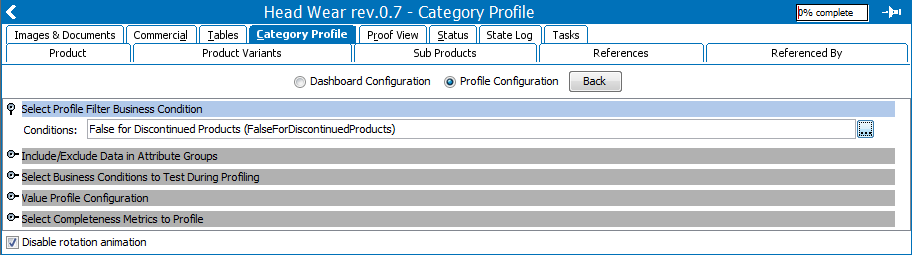
As an example, in the following screenshot a business condition that excludes discontinued products is selected:
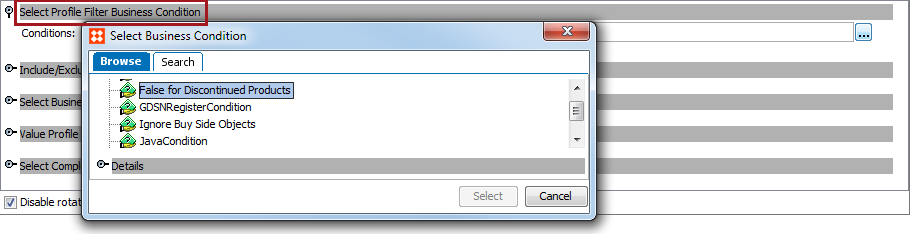
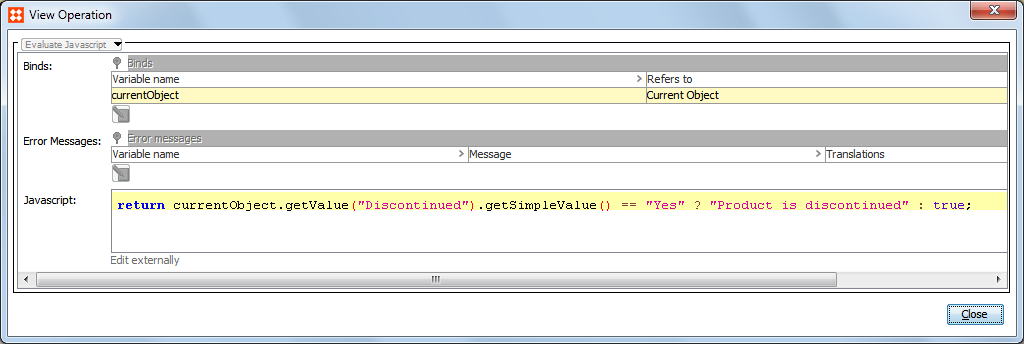
The selected condition specifies that if the attribute Discontinued is set to Yes, the object is excluded from the profiling. The selected business condition is pictured below:
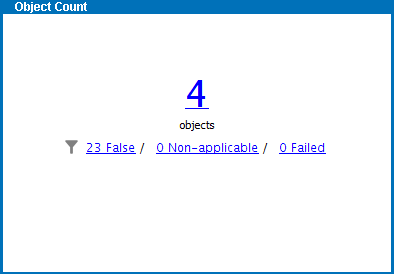
For more information on how to configure the Object Count widget, see the Category Profile Dashboard section of the Data Profiling documentation
The Include / Exclude Data in Attribute Groups parameter allows users to filter the data being profiled via attribute group.
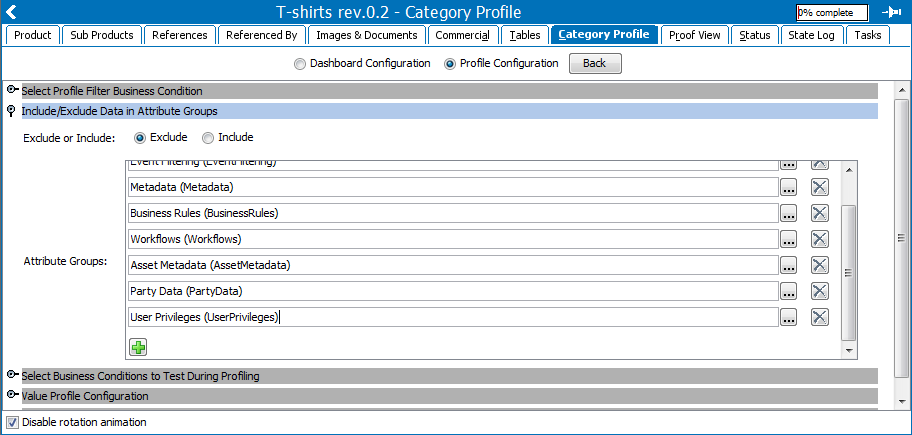
Note: To include all attribute groups in the system, the user can simply select Exclude and leave the Attribute Groups field blank.
The Select Business Conditions to Test During Profiling parameter allows users to test business conditions for all products, entities, classifications, and assets when profiling a selected hierarchy. The result of the tests can be displayed in Business Condition Status widgets on the dashboard.
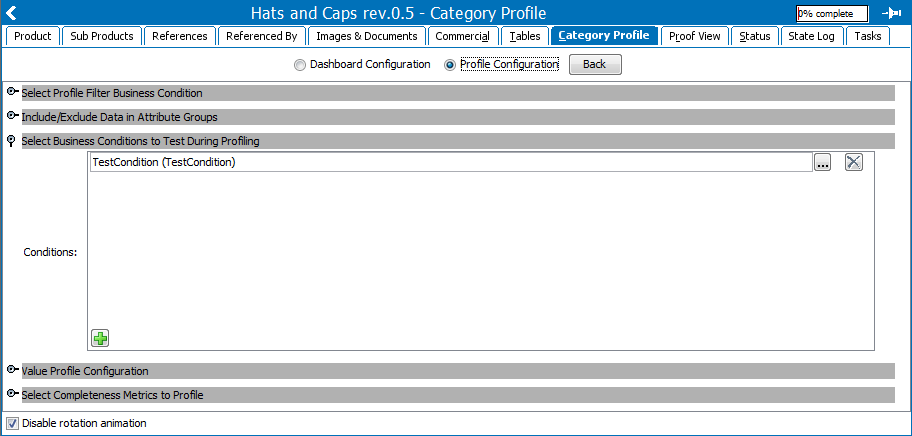
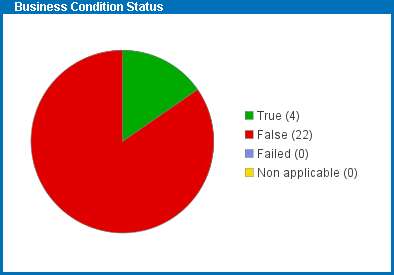
For more information on how to configure the Business Condition Status widget, see the Category Profile Dashboard section of the Data Profiling documentation
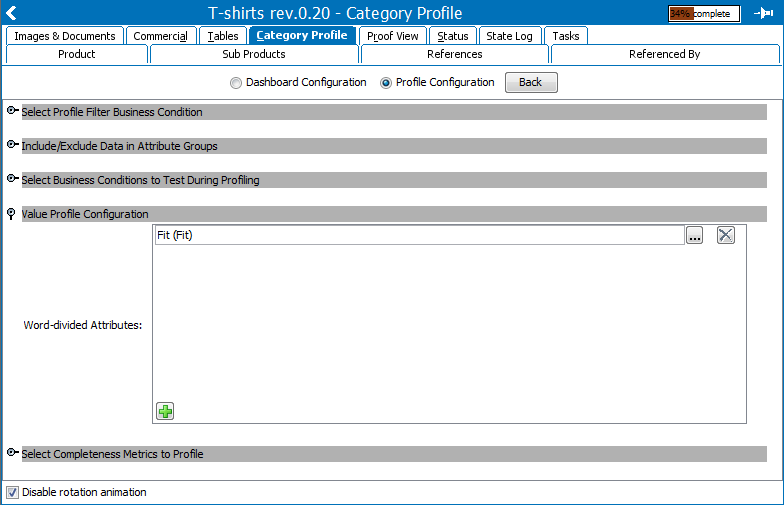
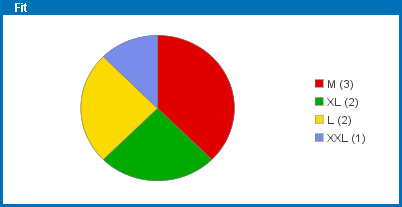
The Value Profile Configuration parameter allows users to profile the individual words of an attribute's value. As an example, 'Fit', an attribute with validation base type 'Text', lists all applicable shirt sizes for a product. These individual sizes can be profiled separately so that the attribute value 'M L XL' is profiled as three different values, 'M', 'L', and 'XL'.
Attribute value as seen on the product node:

Profiled values as seen in the Value Detail view:
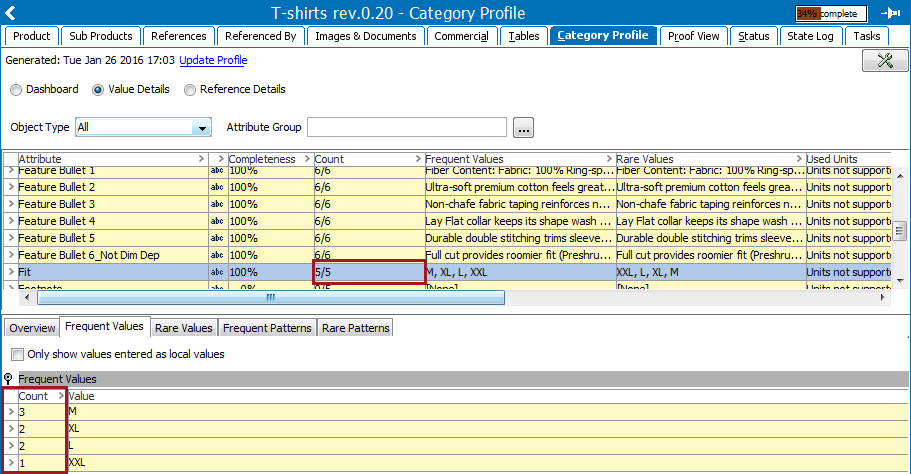
In addition to the Value Details view, this separation of values is also reflected on all applicable dashboard widgets.
For more information on the Value Details view, see the Value Details section of the Category Profile documentation here.
Select the attributes whose values should be profiled separately.
The Select Completeness Metrics to Profile parameter allows users to specify which completeness metrics to use when profiling the data.
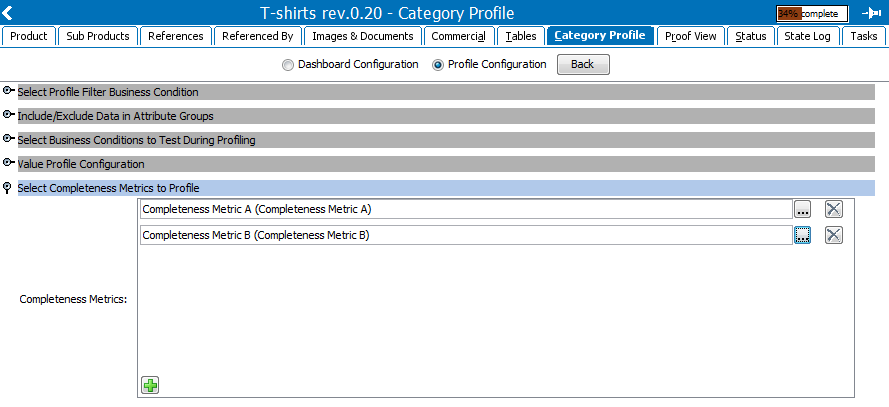
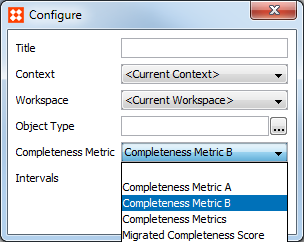
If using the Average Object Completeness widget, ensure that this field includes whichever completeness metric is configured on the widget. If they do not match, a 'no data available' message will appear in place of the data on the widget.
Important: Even if the completeness metric specified by the widget is the same as the system default, it will still display the 'no data available' message. To use this widget the proper completeness metric must be specified in the Profile Configuration.
For more information see the Available Widgets section of the Data Profiling documentation here.
2017, Stibo Systems