A derived event is an event that is triggered based on the triggering of another event. When the trigger you need is not available as a core event, use a derived event.
For example, it is common to configure a derived event to trigger when:
- An object reaches a specific state in a workflow.
- An event-based OIEP cannot discriminate the republish event from other types of events because it would also be registering events and publishing data.
- Referenced images, referenced products, parent products, or products that are linked, removed, or modified in a specific classification structure.
- The triggering object types are set up on an event-based OIEP, and then the business rules are applied to generate derived events based on the original object type triggering.
- An object does not have a change in approval status, but the inherited value changes on the children need to be published.
Prerequisites
Derived Events is an advanced topic, it is expected that anyone reading this documentation is familiar with Core Events. For more information see the Core Events section of this guide
Also, a thorough understanding of business rules is needed to create successful derived events. For more information, see the Business Rules section here, and see the Event-Based Example Business Rules for Derived Events section of the Data Exchange documentation here.
Add a Derived Event Type
A derived event type must exist before it can be configured for an OIEP.
To create a derived event type:
- Go to System Setup.
- Click Derived Events.
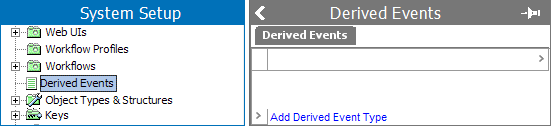
- On the Derived Events tab, click the Add Derived Event Type link, and the Add Derived Event Type dialog will display.

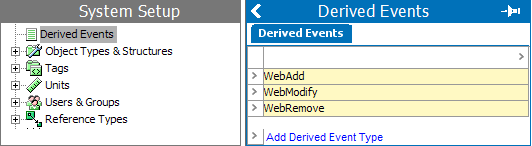
- Type an ID, click the Add button, and the Derived Events tab will list the newly added derived event type. In the example below the commonly used derived event types are listed. Once the derived event type is listed, it is available for use.
Use a Derived Event Type in an OIEP
When configuring an event-based OIEP output template, derived event types can be selected to enable sending files formatted in different ways or to include different data based on the action that triggers the event. For example, when pushing data to a website, consider the following derived event types:
- WebAdd - when an object is first linked into a classification.
- WebModify - when an object link to a classification is modified.
- WebRemove - when an object is unlinked from a classification.
To use a derived event type in an OIEP:
- In an event-based OIEP, Configuration > Output Templates flipper > click the Add configuration link, or edit an output template that is already displayed.
- On the Conditions for Output Template dialog, select the object type and the derived event type. In this example the derived event type is 'WebAdd'.
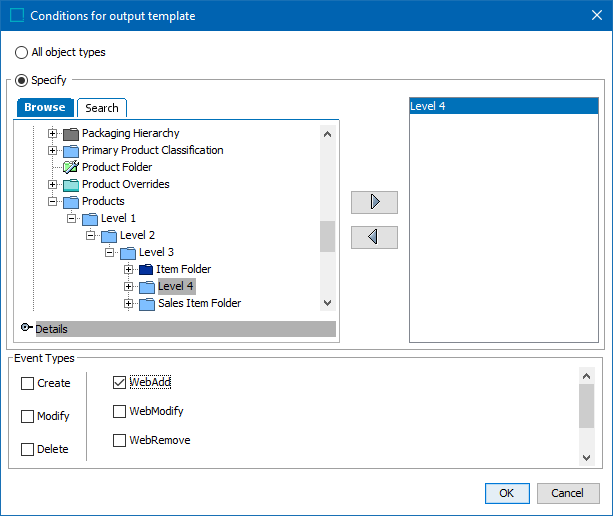
- Repeat the previous steps to create additional output templates for other derived events.
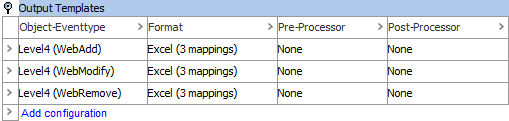
In this example, the format for all output templates is Excel but the mapping differs in each template based on the derived event being output. It is also possible to specify different output formats for each output template such as Generic XML, STEPXML, or CSV, depending on the specific requirements.
Delete a Derived Event Type
It is possible to delete a derived event type when it is no longer necessary. This also removes it from the available Event Types displayed when configuring an OIEP Output Template.
To delete a derived event type:
- Go to System Setup.
- Click Derived Events.
- Find the derived event type to be removed, select the row icon, and the available options will display.

- Click Remove Derived Event Type and the Remove Derived Event Type dialog will appear.

- Click Remove and the Derived Events tab will no longer list the deleted derived event type.