Configuring an Asynchronous File Exchange Service
The File Exchange Service is an asynchronous translation add-on component that allows users that do not have a contract with any of the translation services that STEP supports, such as Lionbridge and SDL, a way to export and/or import translation files to folders instead of using a translation service API.
Note: In order to access the File Exchange Service, the 'file-exchange-translation' add-on component must be activated on your system. See your Stibo Systems representative for more information.
When initiated, the File Exchange Service exports translation files into an out folder. The user manually retrieves these files, makes desired changes to the text that needs translation, and places these files into the in folder. The updated files are then imported back into STEP during the asynchronous poller process.
For information regarding configuring other asynchronous translation services, see the Configuring an Asynchronous Translation Service topic here.
Important: Before an asynchronous service can be set up and configured, an Asynchronous Services setup group root node and object type must be created. For more information about creating Setup Groups in general, see the Setup Groups section of the System Setup / Super User Guide here.
Configuring the File Exchange Service
To use the File Exchange Service, it must be selected as an Asynchronous Service:
- With the workbench open and the System Setup tab selected, right-click on the Asynchronous Services root node, and select 'New Asynchronous Service Configuration.' The Asynchronous Service Configuration Wizard opens.
- From the Select Service dropdown menu, select 'File Exchange Service.'
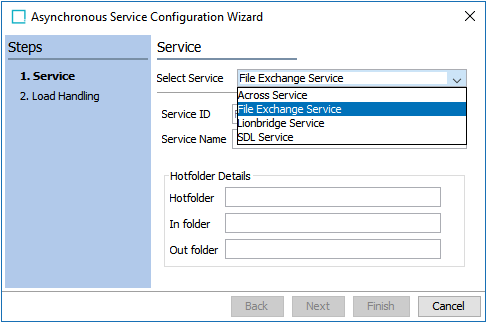
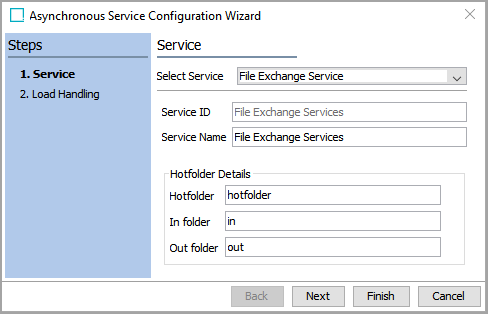
- Enter a name into the Service ID and the Service Name text fields.
- In the 'Hotfolder Details' section, enter a name for the Hotfolder as well as the In folder and Out folder. Both the 'In' and 'Out' folders are subfolders within the Hotfolder. For more information on hotfolders, see the STEP Terminology topic in the Getting Started documentation here.
- Click 'Next,' and enter the desired settings for Load Handling. Once complete, click 'Finish.'
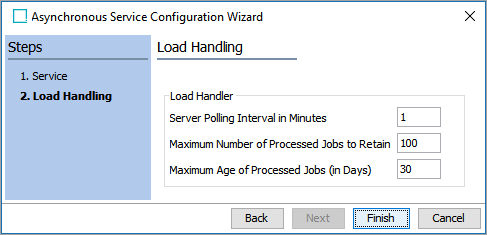
The File Exchange Service has been configured and is ready for translation.
For more information regarding Asynchronous Services, see the Asynchronous Translations documentation here.
For more information regarding the use of the File Exchange Service component within the Web UI, see the Translation Status Widget Configuration topic in the Asynchronous Translations documentation here.