Audit Message Framework Functionality Overview
The Audit Message Framework uses the following features and functionality to process and send messages:
- Public JavaScript API methods to audit and persist STEP data, including workflow status and events. The public API methods can be used from custom code or from within JavaScript business actions.
- A simplified messaging system to deliver data to an external database via Java Database Connectivity (JDBC) and Cassandra.
- A public API interface for custom extensions.
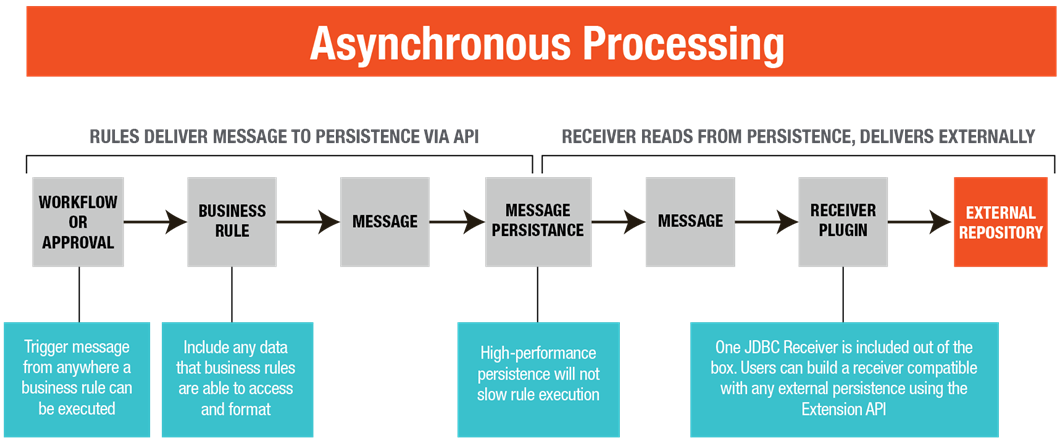
The graphic below provides a more detailed view of how the Audit Message Framework functions. A high-level summary is as follows:
- Business rules are executed to deliver messages asynchronously to persistence via the API
- The out-of-the-box JDBC receiver or Cassandra receiver reads these messages from persistence
- The messages are delivered to an external repository (i.e., another database)
Note: Though the Audit Message Framework has the capability to send messages synchronously, it is recommended to send messages asynchronously to help minimize the performance impact on the callers of the interface.
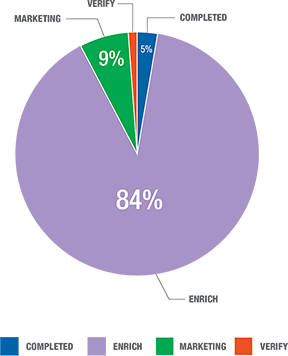
After the information lands in the external repository, the information will likely continue its way downstream into a BI tool, such as Tableau or Qlik. Within these tools, users can visually digest the extracted information in the form of graphics and charts, such as the pie chart below. This example chart details the percentage of objects in specified workflow states at a given moment in time.